

从靶向单药到多警报素协同,人源化小鼠模型应用于哮喘精准治疗新浪潮
2026-09-09 来源:南模生物 点击次数:20精准治疗时代的到来,对临床前评价体系提出了更高要求——TSLP、IL-4及其受体在人与小鼠间不存在交叉反应,传统小鼠模型难以准确评估靶向这些人类靶点的药物。因此,构建更贴近人体生理与病理特征的人源化小鼠模型,已成为连接基础研究与临床转化的关键桥梁。南模生物借助丰富的靶点人源化模型,结合原有成熟疾病模型体系,构建了更加契合目前药物研发的哮喘模型,助力前沿研究。
南模生物哮喘相关动物模型
-
案例一:由OVA+hTSLP诱导的人源化小鼠hIL4/hIL4R/hTSLP/hCRLF2哮喘模型
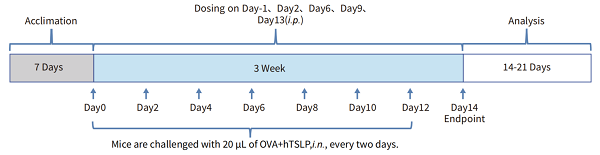
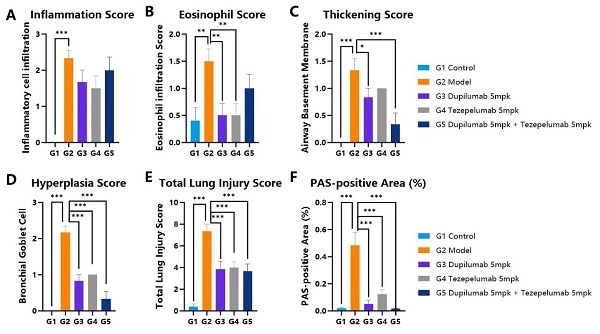
该模型以人源化hIL4/hIL4R/hTSLP/hCRLF2小鼠为背景,经OVA致敏+人TSLP蛋白增强表型,可在保留经典过敏性炎症框架的同时,特异性激活人TSLP信号通路。这一设计使其能够准确评价抗人TSLP抗体(如Tezepelumab)的体内药效,解决了种属交叉反应带来的评价盲区。
常用诱导方法:
模型数据:
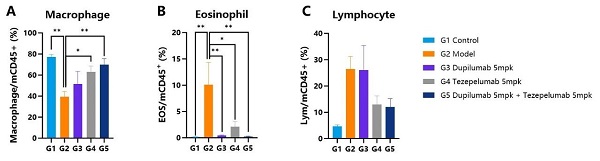
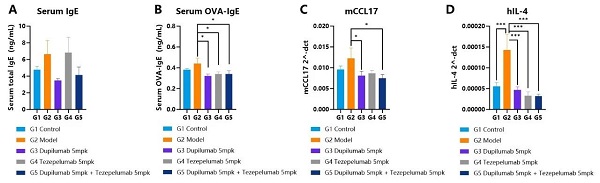
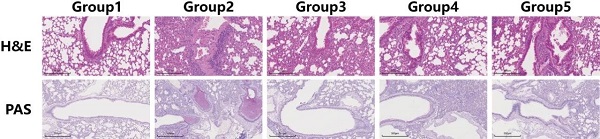
Fig 3. Comprehensive histopathological assessment of lung injury.
-
案例二:由OVA+hTSLP诱导的人源化小鼠hIL4/hIL4R/hTSLP/hCRLF2哮喘模型
该模型以hIL4/hIL4R/hTSLP/hCRLF2人源化小鼠为背景,可模拟哮喘中多重上皮警报素(alarmin)协同作用的复杂病理场景,构建了OVA联合hTSLP与hIL33的哮喘模型,可用于模拟哮喘中多重上皮警报素协同作用的复杂病理场景。该模型不仅支持抗人TSLP与抗人IL-33单药的独立评价,更为探索两者联合阻断的叠加或协同疗效提供了可靠的体内平台。
常用诱导方法:
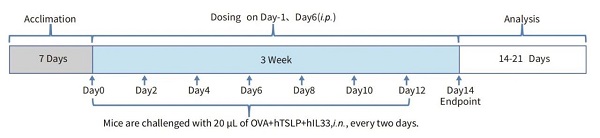
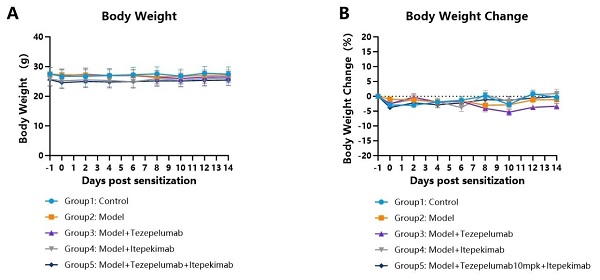
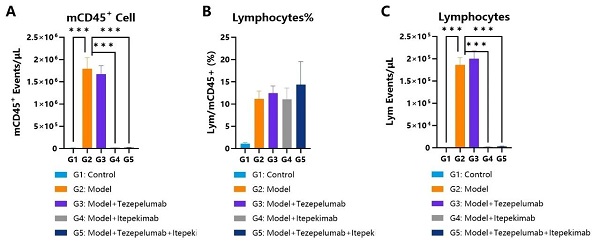
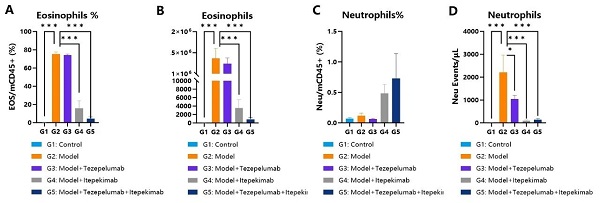
Fig 3. Analysis of inflammatory cell populations in BALF. Flow cytometric quantification of inflammatory cells in BALF. (A) Percentage of eosinophils among total inflammatory cells. (B) Absolute eosinophils count in BALF. (C) Percentage of neutrophils among total inflammatory cells. (D) Absolute neutrophils count in BALF.
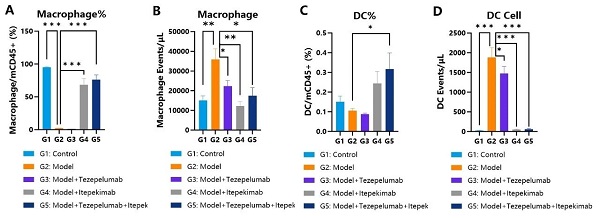
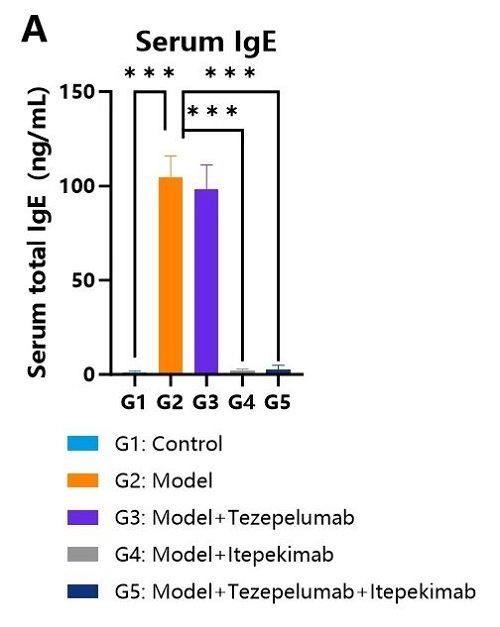
Fig 5. The efficacy of Itepekimab and Tezepelumab on OVA+hTSLP+hIL33-induced asthma model in hIL33/hTSLP/hCRLF2 mice. (A) Concentration of total serum IgE.
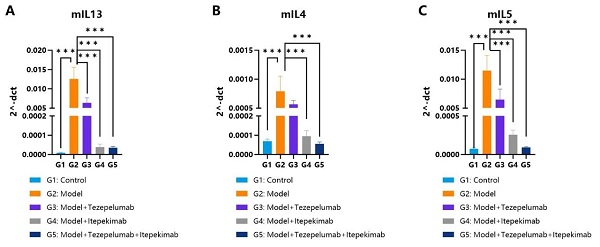
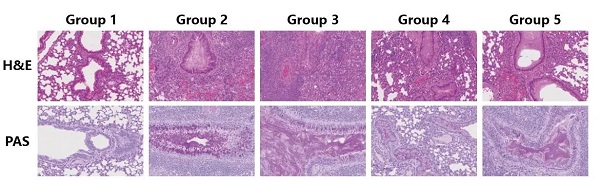
Fig 7. Comprehensive histopathological assessment of lung injury. (A) Representative photographs of H&E-stained lung sections and PAS-stained lung sections.
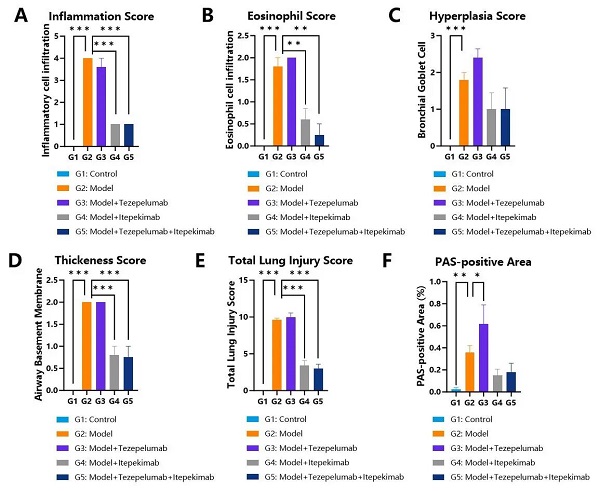
Fig 8. Comprehensive histopathological assessment of lung injury. (A) Inflammatory cell infiltration Score. (B) Eosinophil cell infiltration Score. (C) Bronchial Goblet Cell Hyperplasia Score. (D) Airway Basement Membrane Thickening Score. (E) Total Lung Injury Score. (F) PAS Staining Score.
除上述品系外,南模生物炎症/自身免疫疾病评价平台自主研发了多种哮喘小鼠模型,采用屋尘螨提取物(house dust mite,HDM)、卵清蛋白(ovalbumin,OVA)等方式,在不同品系(C57BL/6,hIL4/hIL4R mice,BALB/c等)中构建小鼠哮喘模型,并进行了相关验证,可用于哮喘治疗药物的药效评价。
想了解更多详情,可跳转往期推文或点击阅读原文查看详情:世界哮喘日 | 南模生物哮喘模型,助力探究哮喘新疗法。
相关阅读
人源化模型怎么选?南模生物炎症/自免平台全面赋能临床前研究
MRGPRX2:肥大细胞激活开关,过敏性疾病治疗新星!
关于我们
上海南方模式生物科技股份有限公司(Shanghai Model Organisms Center, Inc.,简称"南模生物"),成立于2000年9月,是一家上交所科创板上市高科技生物公司(股票代码:688265),始终以编辑基因、解码生命为己任,专注于模式生物领域,打造了以基因修饰动物模型研发为核心,涵盖多物种模型构建、饲养繁育、表型分析、药物临床前评价等多个技术平台,致力于为全球高校、科研院所、制药企业等客户提供全方位、一体化的基因修饰动物模型产品解决方案。